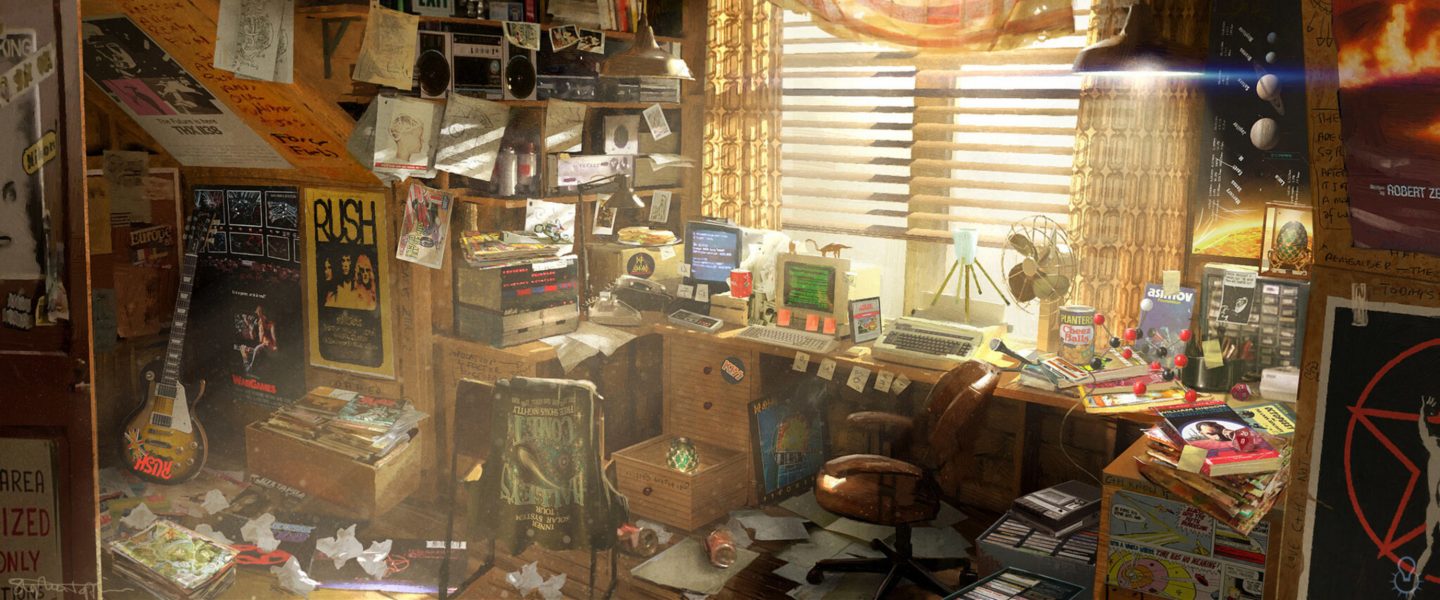
Uncle Joe is back and ready to take a hands-on approach to America’s problems! Joe Biden has a good feel for the American people and can smell what they really want deep down. Joe is ready for a fight and will give a good ol’ fashioned pounding to anybody who gets in his way!
In 1996, Senator Joe Biden voted for the Defense of Marriage Act which defined marriage as between a man and a woman. This law also prevented states from recognizing same sex marriages.
Senator Joe Biden authored and voted for the Violent Crime Control and Law Enforcement Act of 1994 which initiated the “3 Strikes and You’re Out” policy which has resulted in many people spending life sentences in jail for minor crimes. He nicknamed it the “Biden Bill.”
In 1982, Senator Joe Biden initially voted for a constitutional amendment which would have allowed states to overturn Roe v. Wade – the Supreme Court decision which legalized abortion.
In the 1970’s Joe Biden stated that “I have become convinced that busing is a bankrupt concept.” He actively worked to oppose busing as a way to desegregate schools. Biden even wrote letters seeking the support of people who thought schools should be segregated by race.
Senator Joe Biden, who at the time was chair of the Senate Foreign Relations Committee, voted for the resolution to authorize military involvement in Iraq. The Iraq war resulted in the death of 4,424 US military members and cost taxpayers $2.4 trillion.
Harsher mandatory minimum sentences for drug use, civil asset forfeiture without a conviction, and imposing death penalty for drug related murders – this is Joe Biden’s legacy. He voted for both the Anti-Drug Abuse Act of 1986 and its 1988 counterpart and claimed George H. Bush’s war on drugs was “not tough enough, bold enough, or imaginative enough.”
Leading Defence Ministry officials and Canada’s military top brass used a Canadian Defence Association Institute (CDAI) conference in Ottawa last week to press for tens of billions of dollars in additional military spending to prepare for future wars.
Held under the title “How to position Canada in a world of great power plays,” the conference focused on the strategic threat Russia and China represent for Canada’s ruling elite. To counter this purported threat, speaker after speaker called on Ottawa to expand its already vast, global military-strategic partnership with US imperialism, and in particular for the “modernization” of the Canada-US joint North American Aerospace Defence Command (NORAD).
Canada’s Chief of Defence Staff, General Jonathan Vance, invoked a nightmare scenario in which Canada is forced to deal with attacks launched by Moscow or Beijing with hi-tech weaponry that NORAD’s current radar systems, which were last upgraded during the Cold War, are incapable of coping with. “We’re facing new, more advanced conventional missiles that can be launched from further away, travel faster and are more maneuverable,” said Vance. “More importantly, they have the potential to hold North American decision-making hostage in a period of conflict, let alone threaten our force generation capacity and critical infrastructure. Even a modest attack could hamper or cripple Canadian response to crisis—or harm Canadians or critical infrastructure.”
Vance’s drastic warnings were echoed by almost every other speaker, with general agreement among those present that conflict with Russia has already begun. “This is not an interwar period. The war is on,” asserted Frederick Kagan, resident scholar at the American Enterprise Institute. “The principle challenge is our own failure to recognize we are involved in a great scale conflict with Russia.”
The Trudeau government already dramatically intensified Canadian imperialism’s preparation for great-power conflict when it tabled a new National Defence Policy in 2017 that motivated a 73 percent increase in military spending by 2026. In an address to Parliament introducing the new policy, then Foreign Minister Chrystia Freeland, a notorious anti-Russia war hawk, placed great emphasis on Canada’s participation in the two imperialist world wars of the first half of the twentieth century. She proclaimed that this history shows that “hard power,” i.e., the ability to wage war, has always been part of Canada’s foreign policy and must remain so in the future.
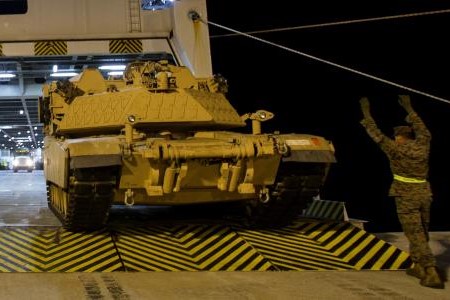
The new military spending is being used to purchase a new fleet of fighter jets, upgrade Canada’s submarines, construct a new fleet of warships and obtain other modern weapons systems, including armed drones. This massive rearmament program is supported by the entire political establishment, including the social-democratic New Democrats, which waged an election campaign last fall based on the need to spend tens of billions of additional dollars on the armed forces.
In addition, the Trudeau government has further integrated Canada’s armed forces into US imperialism’s aggressive military operations around the world, from the ongoing war in Syria and Iraq to the huge NATO-led military build-up against Russia in Eastern Europe and the Baltic states, and the expansion of naval operations in the Asia-Pacific aimed at encircling and isolating China.
However, the discussions now underway go far beyond what has already been implemented. Speakers at the conference made clear that the modernization of NORAD, which they argued was unavoidable, had not been costed in the 2017 military spending hike and would require tens of billions of dollars in additional investment.
Deputy Minister of Defence Jody Thomas spelt this out most clearly, declaring that the 2017 national defence policy was now obsolete. “The world is changing faster than first projected when we presented our defence policy,” she remarked in her speech to the meeting.
Thomas’ statements were backed up by Lieutenant Gen. Christopher Coates, deputy commander of NORAD. “North America is no longer a sanctuary,” stated Coates. “Russia and others are engaged in an uncontrolled race for dominance across a variety of domains… Russia’s actions and capabilities are a large part of what’s driving that need for change.”
Last week’s conference marks the culmination of a long-running push by top US and Canadian military and defence policy figures for unprecedented financial resources to be made available to the armed forces. At last November’s Halifax International Security Forum, leading US defence policy officials, including Trump’s National Security Adviser Robert O’Brien, bluntly demanded that Canada immediately move towards the NATO target of allocating 2 percent of its GDP for military spending. O’Brien also warned Canada about the consequences of failing to maintain a hard-line stance towards China when he stated that any involvement of China’s tech giant Huawei in Canada’s 5G network would result in a downgrading of intelligence sharing between Washington and Ottawa.
In a conference on the future of NORAD hosted by the Canadian Global Affairs Institute in late January, Commodore Jamie Clarke, the deputy director of strategy for NORAD, underscored that the planning for a war with Russia has reached a very advanced stage. Addressing the specific capabilities of NORAD’s North Warning System, a chain of radar stations located in Canada’s Arctic, Clarke said, “Currently, the North Warning System cannot identify and track Russian long-range bombers prior to their missile-launch points or their overflights of the Arctic region. Yet this system, entering its fourth decade of service, is the system we rely on each and every day.”
Vance also focused on the theme of continental defence in his speech to last week’s CDAI Security and Defence Conference. Stressing the importance of Canada’s role in the Arctic, he said, “What I am increasingly concerned about is the Arctic as an avenue of approach. The Canadian Armed Forces are mandated to deter and defeat threats to North America that would travel through the Arctic waters and airspace in the years to come. We must be able to ensure Arctic security be it a region, a place, or an avenue of approach. This requires strengthening inter-agency and multinational partnerships, increasing surveillance and military capabilities, and improving our ability to base, project, and sustain forces in the North. It requires new approaches to sovereignty assurance that accounts for the very real pan-domain nature of conflict.”
Taken together, the comments of Canada’s leading military personnel and Defence Ministry civil servants amount to a plan for a vast program of rearmament that will make the tens of billions of dollars in new spending unveiled in 2017 look like little more than a modest down payment. This will also entail revisiting Canada’s participation in an upgraded version of the US-led Ballistic Missile Defence shield, an initiative that is aimed at creating conditions to wage a “winnable” nuclear war.
This mad war drive, which puts the lives of billions of people around the world at risk, is being sold as a crusade for human rights. Speakers at the Security and Defence Conference repeatedly referred to Canada’s commitment to “the rule of law,” a euphemism for the US imperialist-dominated world order that emerged from World War II and which Ottawa is determined to uphold with military force.
The ruling elite intends to advance its predatory interests at home and abroad by savaging what remains of workers’ social rights and public services, so as to divert society’s resources into rearmament and further massive tax cuts for big business, the rich and super-rich.
This is why the Trudeau government, citing the need for “national unity”—the same justification used by the bourgeoisie everywhere to demand support for aggressive militarism and war—is aligning itself ever more openly with Canada’s most right-wing provincial governments in decades. Doug Ford’s Progressive Conservatives in Ontario, François Legault’s Coalition Avenir Québec, Jason Kenney’s United Conservatives in Alberta and Scott Moe’s right-wing government in Saskatchewan have been tasked with saving tens of billions of dollars through austerity measures so the funds spent on education, health care and social services can be redirected to purchasing armed drones, missiles, fighter jets and warships.
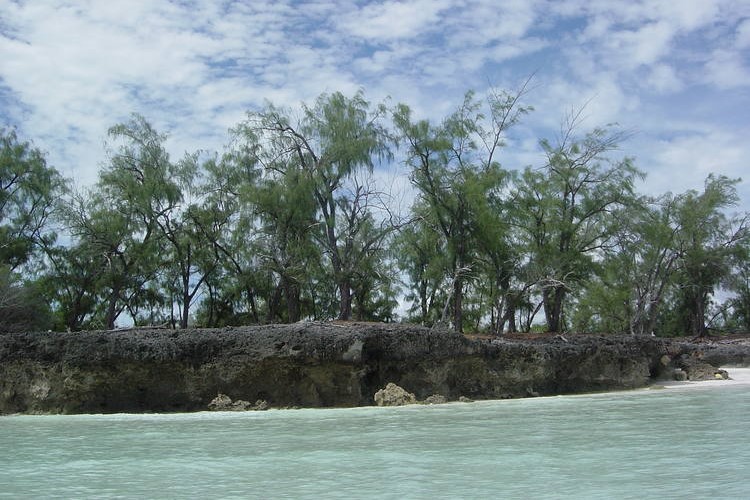
The atoll is comprised of four large coral islands which enclose a shallow lagoon; the group of islands is itself surrounded by a coral reef. Due to difficulties of access and the atoll’s isolation, Aldabra has been protected from human influence and thus retains some 152,000 giant tortoises, the world’s largest population of this reptile.
Brief synthesis
Located in the Indian Ocean, the Aldabra Atoll is an outstanding example of a raised coral atoll. Due to its remoteness and inaccessibility, the atoll has remained largely untouched by humans for the majority of its existence. Aldabra is one of the largest atolls in the world, and contains one of the most important natural habitats for studying evolutionary and ecological processes. It is home to the largest giant tortoise population in the world. The richness and diversity of the ocean and landscapes result in an array of colours and formations that contribute to the atoll’s scenic and aesthetic appeal.
Criterion (vii): Aldabra Atoll consists of four main islands of coral limestone separated by narrow passes and enclosing a large shallow lagoon, providing a superlative spectacle of natural phenomena. The lagoon contains many smaller islands and the entire atoll is surrounded by an outer fringing reef. Geomorphologic processes have produced a rugged topography, which supports a variety of habitats with a relatively rich biota for an oceanic island and a high degree of endemism. Marine habitats range from coral reefs to seagrass beds and mangrove mudflats with minimal human impact.
Criterion (ix): The property is an outstanding example of an oceanic island ecosystem in which evolutionary processes are active within a rich biota. Most of the land surface comprises ancient coral reef (~125,000 years old) which has been repeatedly raised above sea level. The size and morphological diversity of the atoll has permitted the development of a variety of discrete insular communities with a high incidence of endemicity among the constituent species. The top of the terrestrial food chain is, unusually, occupied by an herbivore: the giant tortoise. The tortoises feed on grasses and shrubbery, including plants which have evolved in response to its grazing patterns. The atoll’s isolation has also allowed the evolution of endemic flora and fauna. Due to minimal human interference, these ecological processes can be clearly observed in their full complexity.
Criterion (x): Aldabra provides an outstanding natural laboratory for scientific research and discovery. The atoll constitutes a refuge for over 400 endemic species and subspecies (including vertebrates, invertebrates and plants). These include a population of over 100,000 Aldabra Giant Tortoise. The tortoises are the last survivors of a life form once found on other Indian Ocean islands and Aldabra is now their only remaining habitat. The tortoise population is the largest in the world and is entirely self-sustaining: all the elements of its intricate interrelationship with the natural environment are evident. There are also globally important breeding populations of endangered green turtles, and critically endangered hawksbill turtles are also present. The property is a significant natural habitat for birds, with two recorded endemic species (Aldabra Brush Warbler and Aldabra Drongo), and another eleven birds which have distinct subspecies, amongst which is the White-throated Rail, the last remaining flightless bird of the Western Indian Ocean. There are vast waterbird colonies including the second largest frigatebird colonies in the world and one of the world’s only two oceanic flamingo populations. The pristine fringing reef system and coral habitat are in excellent health and distinguished by their intactness and the sheer abundance and size of species contained within them.
Integrity
The property includes the four main islands which form the atoll plus numerous islets and the surrounding marine area. It is sufficiently large to support all ongoing biological and ecological processes essential for ensuring continued evolution in the atoll. The remoteness and inaccessibility of the atoll limit extensive human interference which could otherwise jeopardize ongoing processes. As such, Aldabra displays an almost intact ecosystem, sustaining naturally viable populations of all key species.
Protection and management requirements
The property is legally protected under national legislation and is managed by a public trust, the Seychelles Islands Foundation, with daily operations guided by a management plan. Boundaries are ecologically viable but the extension of the seaward boundary some 20 km into the sea would provide additional protection to the marine fauna. While the remoteness of the property has limited human interference, thus contributing for the protection of the biological and ecological processes, it also poses tremendous logistical challenges. Tourism is limited and carefully controlled. Whilst the property displays an almost intact ecosystem, protection and management need to address the constant threats posed by invasive alien species, climate change and oil spills, particularly in the event that oil exploration increases in the wider region.
Former President Bush danced with members of Kankouran West African Dance Company during a Rose Garden event to mark Malaria Awareness Day at the White House, April 25, 2007.
Had Back to the Future come to life as originally envisioned by the purse string-holders at Universal Pictures (which owned the rights to Bob Gale’s screenplay), it might have been a very different project, with Eric Stoltz in the lead role. Stoltz, however, bowed out early during filming due to that ever-popular reason: “creative differences,” opening the door for Michael J. Fox (or, as nearly everyone knew him at the time, Alex P. Keaton). Would Back to the Future have become a modern classic with a different lead actor? That’s as much of an unknown as what Casablanca would have been like with Ronald Reagan asking Sam to play “As Time Goes By.” What is known, however, is that the version of Back to the Future produced by Robert Zemeckis remains one of the mid-’80s most enduring and enjoyable confections: an infectious mix of comedy, fantasy, satire, excitement, and nostalgia.
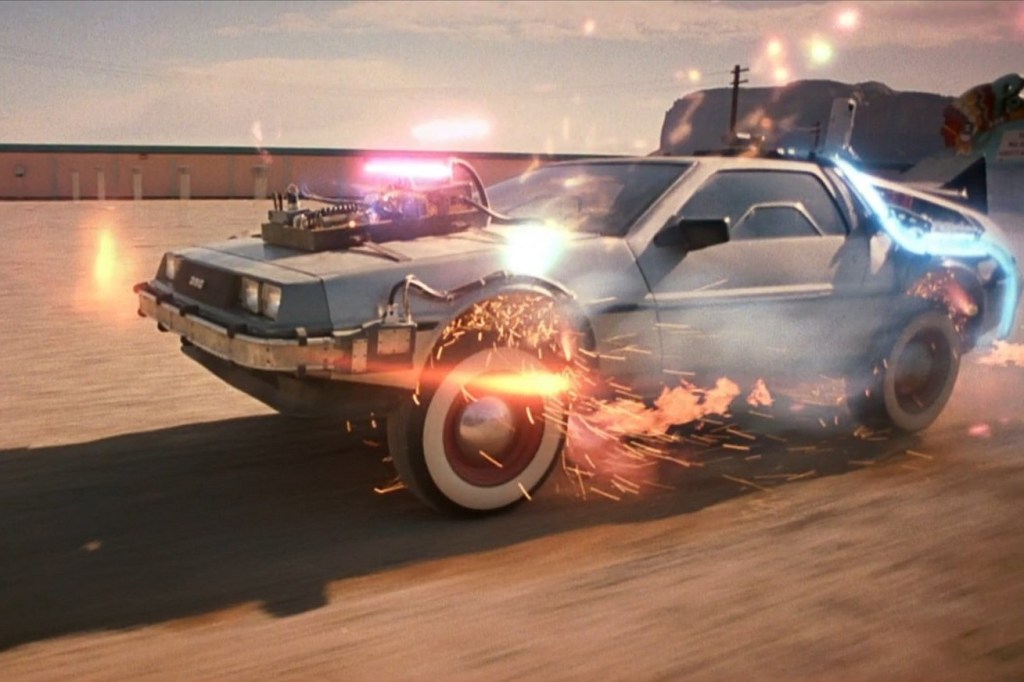
In 1985, Marty McFly (Fox) is an average high school teenager with a pretty girlfriend and a lousy home life. His father, George (Crispin Glover), is a spineless toady who can’t so “no” to his overbearing boss, Biff Tannen (Thomas F. Wilson), and his mother, Lorraine (Lea Thompson), is a nagger. Marty spends as much time away from home as possible, often stopping by the house of Doc Brown (Christopher Lloyd), the local mad inventor. But Doc Brown’s latest invention – in function if not appearance – is anything but laughable. It’s a DeLorean converted into a time machine. When Marty inadvertently ends up in the driver’s seat, he is sent back 30 years to 1955. His appearance in an era before he was born forces him to seek out a younger version of Doc Brown, but also has unintended consequences. When a teenage Lorraine become infatuated with him, she loses all interest in other boys and this puts the future, and Marty’s existence, in jeopardy.
Back to the Future is played neither entirely seriously nor entirely for laughs, and therein lies the nature of its success. It’s funny and breezy but doesn’t descend to a level where the characters are little more than props for jokes. We believe in Marty, like him, and root for him to succeed. Part of the reason for that is Michael J. Fox, whose unforced screen charisma had already made him a huge television success. (He was the #1 reason Family Ties was a Sunday night staple.) Fox brought a lion’s share of that “aw shucks” affability to Marty, and Back to the Future launched Fox’s big-screen career. In order to appear in Back to the Future (once he had agreed to replace Stoltz), Fox had to go virtually without sleep. During the day on weekdays, he would film Family Ties episodes. At nights and on weekends, he made Back to the Future.
Like Crocodile Dundee one year later, Back to the Future is at its heart a “fish out of water” story, about an ’80s boy being trapped in a 1950s small town. His mother is smitten with him, the local bully doesn’t like him, his dad is a wimp, and he doesn’t fully understand the customs and lingo of the period in which he has become stranded. Plus, there are the twin difficulties of repairing a state-of-the-art 1980s time machine using 1950s technology and patching the damage his presence has caused to the time continuum. Zemeckis plays much of this with a light touch, but when there are opportunities for some excitement (as when Marty has a deadline to get to the “finish line” or risk not getting to 1986 until he’s middle-aged), he milks it for all it’s worth. Back to the Future leaves viewers a little breathless, but not drained – exhilarated and smiling.
Nostalgia plays a role in Back to the Future’s success. For kids in the ’80s, it suggested the ’50s of Leave it to Beaver and other black-and-white sit-coms that were in UHF re-runs around the time Back to the Future opened. For 40-somethings, the movie provided a glimpse of their past through rose-colored glasses (always the best way to remember high school). When the film is watched today, some 25 years after its release, the nostalgia is double-barreled. Now, the ’80s scenes are as evocative as the ’50s material.
Back to the Future represented a career resuscitation for Christopher Lloyd, whose popularity had nosedived after the cancelation of Taxi, where he spent six years playing Reverend Jim. Roles in Star Trek III: The Search for Spock and Buckaroo Banzai enabled him to avoid obscurity, but it was his wacky turn as Doc Brown that defined his movie career. He plays the Doc like a stereotypical mad scientist – as brilliant as he is forgetful, a combination of Einstein and Doctor Who. Lea Thompson, a popular choice of the era to play high school sweethearts (see also All the Right Moves and Some Kind of Wonderful), shows that Lorraine is less prim-and-proper than her middle-aged self might indicate. (How many of us, I wonder, would be surprised if given an opportunity to interact with our parents when they were teenagers?) Crispin Glover, who has always marched to his own beat (as in his infamous appearance on David Letterman’s talkshow in 1987), is wonderful as the quavering, self-doubting George. For Glover, this may have been the most mainstream role he ever accepted (and he quickly distanced himself from it after the movie was released). Thomas F. Wilson provides a deliciously cartoonish sense of menace in his portrayal of the film’s thuggish villain, Biff.
If there’s a problem with Back to the Future, it’s the film’s ending, which left open the expectation that there would be more chapters to come. In fact, the movie was originally designed as a one-off project, with the final scene being a quirky way to wrap up things rather than a teaser for another installment. However, when Back to the Future topped the 1985 box office and public sentiment was high in wanting to know what the problem was with Marty and Jennifer’s kids, Zemeckis went to work on Back to the Future Part II and III, which were filmed back-to-back and took four years to reach the screen. In retrospect, it might have been better if they had died in development. Rarely have sequels underwhelmed to this degree, with Part II seeming forced and awkward and Part III tired and unnecessary. As a movie, Back to the Future is tremendous fun, but the series is memorable only for what started it.
The ’80s were a dark and cynical decade, remembered by most for excesses of consumption and greed. Back to the Future is unapologetically lighthearted and upbeat – a tonic for a weary movie-going society. Even its theme song (Huey Lewis’ “The Power of Love”) brought a smile to the face on its way up the charts to the #1 position. For Zemeckis, this represented an opportunity to join his buddy Steven Spielberg on the A-list – his next film would be Who Framed Roger Rabbit?, and Forrest Gump was less than a decade away. Like Spielberg, Zemeckis has a keen understanding of how to blend diverse elements of comedy, action, adventure, and drama into concoctions that win over audiences. Marty’s story could easily have been suspenseful, purely comedic, or a three-hankie melodrama, but Zemeckis found the balance and employed it. Back to the Future is a success because of a compelling premise, terrific casting, and exemplary execution. It’s the kind of alchemy that, on those rare occasions when it materializes, cannot be replicated – as the filmmakers discovered when they re-assembled for Back to the Future Part II. The magic lasted for one film, and that’s the one to re-visit.